
AI stands for artificial intelligence. You’ve likely heard concerns about autonomous robots replacing jobs. However, how can organizations benefit from augmented intelligence? While AI may replicate human intellect, it cannot take its place. As a matter of fact, augmented intelligence—also known as human-centered AI or AI-human collaboration—will account for the majority of AI use in the workforce.
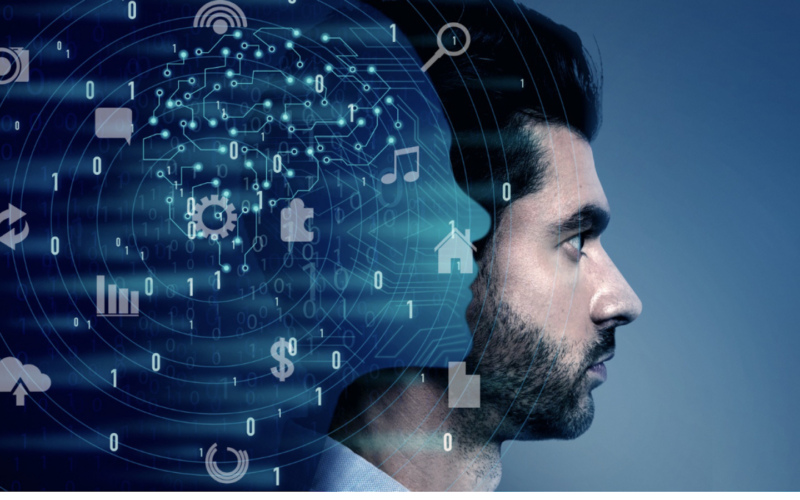
A subtype of artificial intelligence called augmented intelligence (AI) places people at the center of the process by fusing human judgment with machine learning (ML) and deep learning to improve decision-making. It complements human workers rather than taking their place.
For instance, augmented intelligence includes virtual assistants such as Alexa or Siri, which support users by providing information on demand. They provide you with information when you want it; they don’t make judgments. Additionally, asking Alexa for the next ingredient is more convenient than attempting to browse through phone recipes while kneading dough (and your hands are coated in flour).
How to Leverage Augmented Intelligence
1. Can Be Used To Enhance Customer Satisfaction
Companies improve customer satisfaction by understanding how to leverage augmented intelligence. Based on personal preferences and purchasing patterns, it examines past purchases and recommends unique goods. AI-powered chatbots provide quick support by effectively answering frequent questions and fixing customer problems.
AI solutions also help to identify trends and expose areas requiring work by condensing consumer comments. Predictive analytics also helps companies identify potential issues before they escalate and forecast upcoming trends.
Augmented intelligence enables businesses to provide more individualized experiences, simplify support, and proactively satisfy consumer expectations by fusing data insights with human judgment. This integration not only reinforces client loyalty but also enables companies to keep a competitive edge in an ever more data-driven world where efficiency and personalization are key.
2. Use It for Better Decision-Making
AI-generated insights give companies a clearer and more accurate view of how they are doing in general. Identifying trends and patterns, artificial intelligence aids in more accurately predicting future earnings, thus enabling businesses to plan deliberately and distribute resources more wisely.
By providing real-time insights into evolving consumer behaviors, shifting economies, and rival activities, it also lowers market ambiguity. AI enhances human decision-making by offering data-driven recommendations and pointing out possible dangers or possibilities that might otherwise be missed.
Predictive analytics and smart forecasting together enable companies to make more confident, timely, and well-informed decisions. In the end, AI-generated insights improve corporate resilience, maximize performance, and give a big competitive edge in today’s rapidly changing industry.
3. Use It for Efficient Planning
Understanding augmented intelligence helps companies better understand their processes, consumer behavior, market trends, and competitive environment. Artificial intelligence uncovers insights that improve decision-making and productivity by processing enormous volumes of data.
These observations are especially important for teams to enhance the precision of their demand forecasting and planning. AI analysis can help to maximize inventory levels in a production environment so as to prevent both overstock and understock. AI systems also assist in monitoring manufacturing bottlenecks, tracking logistics timetables, and assessing production capacity.
This helps businesses to simplify processes, lower expenses, and raise output. Data-driven artificial intelligence generally helps businesses to make better, proactive decisions that improve performance, boost competitiveness, and allow for ongoing improvement in all aspects of corporate management and production.
4. Use in Retail Businesses
Businesses use augmented intelligence to enhance the overall purchasing experience. This can lead to an improved virtual shopping experience. Customers may now enjoy personalized experiences thanks to AI technologies. Additionally, when combined with technologies like virtual or augmented reality, AI can help create immersive digital shopping experiences.
Virtual assistants are a prime example of augmented intelligence. Although they are employed in retail settings, they do not make choices for people. They provide you with the necessary information when you need it. Cloud storage, big data, and the Internet of Things are further tools. They make data collection, processing, and storage possible.
AI aids companies in increasing conversion. Customers are more engaged as a result. Artificial intelligence also enables more efficient and personalized online shopping experiences. Businesses also gain deeper insight into customer behavior. These systems help businesses analyze customer behavior and support data-driven decision-making.
5. Use in Industrial and Field Services
Supported by tools including smart glasses and smartphone apps, real-time artificial intelligence systems are changing field services and enormously helping field engineers. Engineers may better grasp their environment using AI-powered visual recognition provided by these technologies’ quick access to current knowledge.
Doing this clears ambiguity, increases safety, and boosts effectiveness in on-site activities. Awareness of how to benefit from augmented intelligence helps field workers to swiftly adjust, adapt, and react to obstacles. Stronger business intelligence and better decision-making result from its capacity to examine data in real time.
AI is therefore changing how engineers operate in the field by simplifying processes, increasing output, and promoting a more connected, data-driven method to service management, which improves general service quality as well as operational efficiency.
6. Use in Modelling and Design
For designers, artificial intelligence provides an end-to-end solution that simplifies the whole creative process. It lets them see products on tablets, which cuts down on the need for physical models and saves time and money.
AI helps designers quickly evaluate fresh and current items, therefore enhancing design quality and innovation. This technology also guides more astute company decisions and aids early product development. AI enables designers to think more imaginatively and strategically by improving their cognitive capacity.
The final aim is to create models and designs that are smart, useful, and quick. Used properly, artificial intelligence (AI) technologies give designers a major competitive edge by changing how they think about, create, and improve their ideas while also encouraging more invention, creativity, and precision during design and decision-making.
Read More: 9 Ways to Use AI in Social Media
7. Use in Training Services
In the field of education, artificial intelligence is growing more and more prevalent as it changes how pupils study and do research. Deep learning improves student involvement and comprehension, and artificial intelligence programs broaden the scope of conventional laboratory-based research.
These technologies are also being used in many different kinds of education, which makes learning more fun and quick. Understanding augmented intelligence also helps organizations deploy AI systems more efficiently, often reducing manual effort rather than eliminating the need for coding entirely.
Deep learning enables more individualized and thorough teaching by emulating the capacity of the human brain to process and evaluate data. Consequently, artificial intelligence in education not only encourages better teaching strategies but also provides students with creative tools that inspire critical thinking, creativity, and a better grasp of difficult topics.
8. Use in Financial Sector
Augmented intelligence is especially valuable for financial advisors since it allows them to provide more tailored and goal-driven services. Using this strategy enables companies to improve strategic decision-making and more precisely evaluate risk tolerance. Predictive analytics uses big data to provide more in-depth insights that enhance planning and forecasting.
Furthermore, supported by augmented intelligence are other fields like marketing, autonomous data mining, and knowledge of consumer preferences. It offers financial data scientists strong tools to quickly examine enormous datasets and find underlying trends or patterns.
These sophisticated analytical tools improve both accuracy and efficiency, so experts may confidently base their choices on data. Augmented intelligence generally helps the financial industry by matching human knowledge with AI accuracy to produce better insights, better performance, and stronger client relationships.
Does Using Augmented Intelligence Come with Any Risks?
Knowing how to benefit from augmented intelligence blends human judgment with the analytical capability of artificial intelligence to enhance business performance and decision-making. It helps businesses to get deep, data-driven insights that would be challenging or time-consuming for people to produce alone by processing huge volumes of data in real time.
This technology enables people to overcome limitations like cognitive bias, tiredness, and attention deficits that can cloud judgment. This makes decisions more consistent, objective, and accurate. But one must understand that humans still build and teach augmented intelligence systems.
This implies that occasionally algorithms may be tainted by hidden bias, therefore affecting results and possibly resulting in unfair or incorrect findings. Enterprises, therefore, have to be responsible and careful about combining artificial intelligence. Setting explicit rules, moral frameworks, and openness requirements guarantees that artificial intelligence technologies are used responsibly and impartially.
Maintaining accuracy and trust in AI-driven systems depends on having a clearly defined plan for best practices that includes things like checking data inputs often, checking how well the algorithms are working all the time, and training staff. When used properly, augmented intelligence improves human potential instead of replacing it.
It lets experts concentrate on strategic thinking, creativity, and problem-solving while artificial intelligence takes care of difficult data analysis. Finally, this interaction between people and technology produces better, quicker, and more knowledgeable decision-making in every sphere.
FAQ
Q: What advantages can augmented intelligence offer?
A: Augmented intelligence, a form of artificial intelligence that emphasizes human-machine cooperation, improves decision-making by using AI for tasks like data analysis, pattern recognition, and predictive modeling while depending on human judgment for context-sensitive judgments.
Q: What does augmented intelligence aim to achieve?
A: Without removing people from the equation, augmented intelligence may help with decision-making. AI can help data scientists analyze vast amounts of data by reducing human error and bias and generating useful insights that may guide decision-making.
Q: Who benefits most from augmented intelligence?
A: Professionals in fields such as finance, healthcare, design, manufacturing, and education benefit from augmented intelligence because it enhances analysis, planning, and decision-making while keeping humans in control.