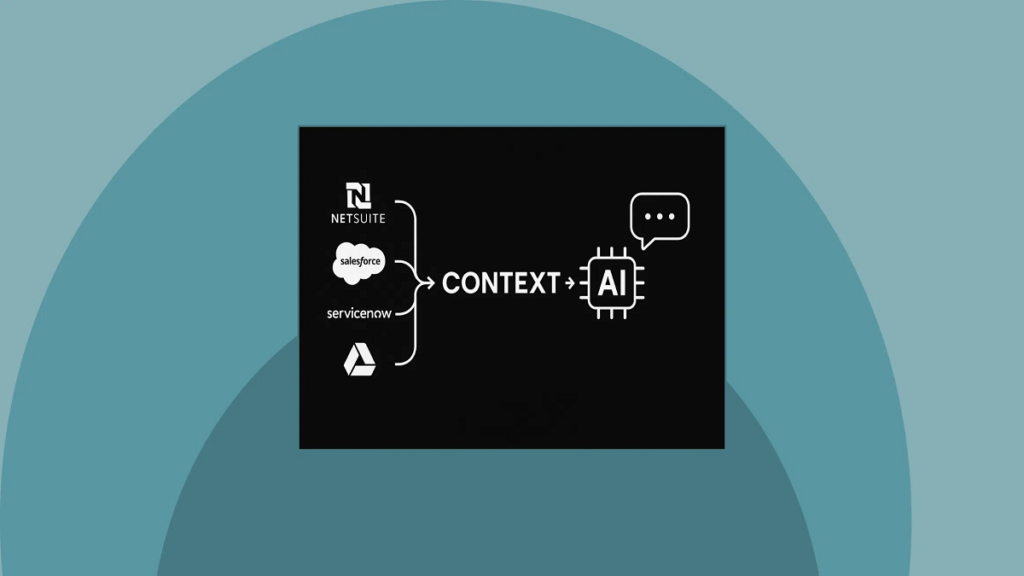
Our initial tendency is to blame the model when an AI system provides an incorrect response. However, the model is often operating with incomplete or poorly structured information. Consider asking a coworker to create a company projection without providing them with the product portfolio, market trends, or even the figures from the previous quarter.
They may still attempt it, but it would be a guess. This is why context engineering has become essential in modern AI systems. We’re not providing it with the proper environment to reason and respond effectively, which is why it’s failing.
This is addressed by the field of context engineering, which involves creating the data, resources, and framework that AI needs before it ever starts the job. Ensuring the AI has the right information and structure often matters more than stylistic prompt wording.
Why Context Engineering Is Emerging

1. Decision-Making Accuracy
Improved decision-making is one of the clearest reasons context engineering is gaining importance. Conventional AI systems often rely on siloed or incomplete datasets, which can cause judgments that are technically correct but useless in real life.
By combining time, geography, past interactions, user preferences, and other elements, context engineering offers a more complete picture of the situation. In healthcare, context-aware AI can tailor recommendations using patient history, demographics, and clinical data, improving relevance and outcomes. This added nuance improves recommendations and reduces avoidable errors.
2. Persistent Memory and Continuity Across Interactions
Effective human communication depends heavily on continuity. In everyday life, we easily recall past meetings, keep tasks ongoing, and build on earlier interactions. Maintaining context across time enables more meaningful conversations and sustained task progress.
For artificial intelligence systems to match this level of continuity, preserving user state, dialogue history, and task progress is essential. This allows computers to provide ongoing, context-aware support that feels more human through coherence and responsiveness.
As a result, AI can reason over current inputs, prior intent, and evolving user needs across multiple interactions. This applies whether it’s a tutor tracking a student’s progress or a virtual assistant supporting a week-long project. By enabling memory, flexibility, and consistency—key traits of effective intelligence—context engineering improves AI usefulness.
3. Personalization at Scale
Context engineering transforms generic AI responses into relevant, task-aware outputs. Rather than viewing every contact as an individual, context-aware systems might customize their conduct based on earlier user-specific data and exchanges.
For example, code assistants can remember previously written functions or common bugs a developer runs into to provide wiser and more relevant suggestions. Medical artificial intelligence systems can monitor a patient’s history across time, modifying diagnoses or treatment suggestions based on changing symptoms and prior results.
Enterprise chatbots benefit in the same way by recalling customer preferences, prior purchases, and support history. This level of personalization improves user satisfaction and helps build long-term trust.
The capacity to provide such customized experiences will set one apart as AI use expands—in a market increasingly driven by smart, human-centered solutions, a real competitive advantage comes from it.
4. Multi-Modal and Cross-App Integration
Context functions as the integration layer that connects multiple data types into coherent understanding as artificial intelligence progressively works across text, audio, images, and video. Context engineering lets models intelligently produce a harmonized overview including action items. Cross-modal awareness helps AI move beyond isolated analysis and toward whole, context-based awareness.
For example, it can find more in-depth information by matching spoken words on a video conference with visual cues or written materials. The binding agent that allows actual multimodal understanding is context, which guarantees that the artificial intelligence understands not only single inputs but also the whole scene.
More precise thinking, more meaningful relationships, and strong support in personal as well as business settings result from this.
5. Cost-Effectiveness and Efficiency
Effective context engineering improves performance and accuracy while reducing resource usage. AI systems can greatly lower computing costs and minimize token usage—a major issue in big language models—by only retrieving the most pertinent data. This is where retrieval-augmented generation (RAG) systems become especially valuable.
RAG systems dynamically retrieve exact background information from outside sources or documents rather than depending just on the model’s own parameters. This focused retrieval guarantees that answers are resource-efficient and contextually correct.
These systems maintain high-quality outputs while streamlining inference time by helping to prevent the need to load or handle huge amounts of useless data. In business applications, this means faster response times, cheaper infrastructure costs, and flexible artificial intelligence solutions that can handle complicated questions with accuracy and speed.
6. Trust, Governance, and Compliance
Handling context ethically becomes a top priority as artificial intelligence systems get more context-aware and store ever more user information. As AI systems become more capable, privacy-sensitive context handling becomes essential. Context engineering supports governance processes to manage the forgetting, anonymization, or retention of information over time.
These governance mechanisms help ensure that sensitive data is managed ethically, enabling systems to meet legal requirements such as GDPR and healthcare data regulations like HIPAA and support evolving AI regulatory frameworks globally. Business settings need ethical context management to create and keep user trust.
Knowing their data is handled safely and transparently increases user trust and engagement with AI solutions. Integrating ethical values into the structure of context-aware systems lets companies guarantee responsible innovation while gaining from the personalization and intelligence that context provides.
Read More: How To Rank in AI Overviews
7. Real-Time Adaptability
Effective performance in dynamic and unpredictable settings requires real-time adaptability enabled by strong context engineering. Based on changing circumstances, systems including chatbots, self-driving cars, and financial trading robots have to rapidly change their reactions.
A voice assistant, for instance, might have to change its speech recognition model in response to background noise, while financial AI systems are constantly adjusting strategies, often in response to geopolitical developments or real-time news.
Techniques like sensor fusion, which combines various types of data; dynamic context windows, which concentrate on the most pertinent facts; and prioritization mechanisms that gradually reduce the influence of outdated context.
These inventions allow artificial intelligence systems to create smart feedback loops, lower dependency on human supervision, and provide more precise, context-aware results in unpredictable, real-world environments.
8. Better Human-AI Collaboration
By allowing continuity, personalization, efficiency, and ethical intelligence, context engineering is revolutionizing artificial intelligence. AI systems employ context to help with multi-step reasoning and long-range goals, just as humans remember previous talks to keep consistency.
This enables chatbots to give individualized assistance, medical AIs to monitor patient advancement, and coding assistants to recall past activities—therefore generating competitive benefits via ongoing personalization.
Context helps AI combine text, audio, and video for more comprehensive understanding; therefore, bridging modalities, such as summarizing connected emails and meetings. Technologies like Retrieval-Augmented Generation (RAG) increase performance by retrieving only pertinent data, therefore lowering prices and token use.
Crucially, ethical context treatment with governance over what is kept, anonymized, or forgotten guarantees user confidence and compliance. Context allows real-time adaptation in dynamic surroundings by sensor fusion and prioritization, therefore producing wiser, more resilient artificial intelligence interactions.
AI’s Prospects for Context Engineering
Understanding why context engineering is the next big thing will enable better user experiences as artificial intelligence agents get more self-governing, interactive, and human-like. Future systems will proactively anticipate, adapt, and engage intelligently over time rather than simply react.
Context engineering will be the basis of this development since it will help artificial intelligence maintain continuity, grasp subtle purpose, and in real time customize outcomes. Driving this change across industries, including healthcare, education, and government services, will be new technologies like edge artificial intelligence (edge AI), neural-symbolic reasoning, and context-aware large language models (LLMs).
Edge artificial intelligence will help to create quicker on-device customization while protecting privacy. Combining statistical learning with logic-based reasoning, neural-symbolic systems will help artificial intelligence to negotiate difficult, organized environments more consistently.
Context-aware LLMs will dynamically combine user-specific, task-specific, and environmental data to deliver richer, more precise interactions. Large language models, domain-specific knowledge graphs, real-time sensor data, and permanent memory systems will be integrated into hybrid AI architectures of the future, thereby elevating context into a core foundation of intelligence.
Rather than treating context as an afterthought, these systems will be designed around it—continuously learning, updating, and reasoning within changing situational frameworks. Some applied AI firms demonstrate this approach by showing how contextual data supports real-world AI solutions, even though they are not dedicated context-engineering platforms.
Their work emphasizes how context is not only an improvement but also a vital enabler of artificial intelligence that is human-aligned, context-aware, and reliable. The growing maturity of these technologies will transform our daily interactions with intelligent systems.
FAQ
Q: What is context engineering in AI?
A: The process of carefully crafting the data, settings, and prompts given to AI systems in order to guarantee that they provide the most contextually appropriate output is known as context engineering. For generative AI models like ChatGPT, Claude, and LLaMA, it’s very important.
Q: Why is context important to AI agents?
A: It aids AI in managing multi-step interactions, understanding intent, and personalizing replies.
Q: In what ways does it improve AI performance?
A: It improves accuracy, relevance, efficiency, and user trust by grounding responses in real-world context.