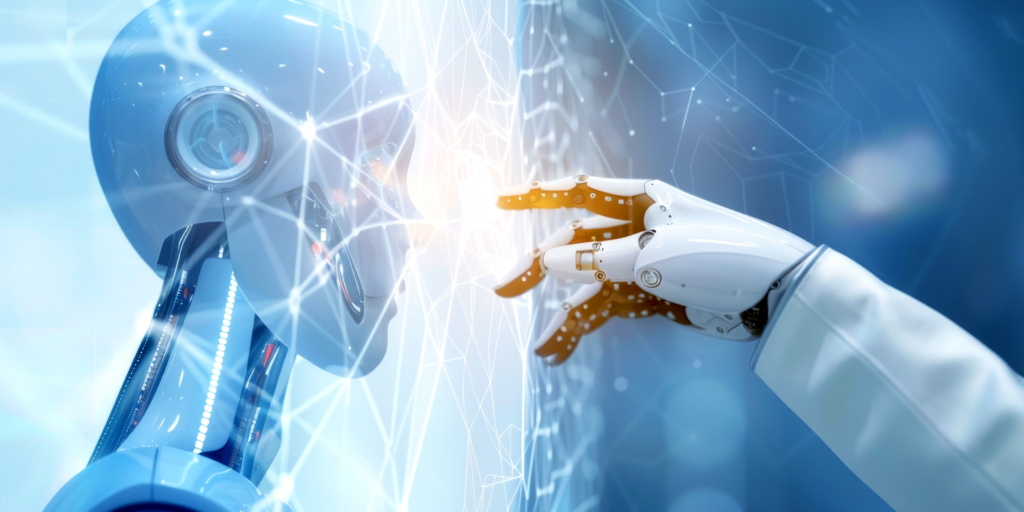
One of the areas at the nexus of science and technology that is developing the quickest is artificial intelligence (AI). Its potential makes it possible to automate some procedures and use data analysis to solve complicated issues. This technology’s increasing influence on the labor market has provoked a variety of responses. Many issues regarding the future of work are raised by the possibility of widespread layoffs brought on by technology or budget cutbacks.
Our goal is to investigate if AI really threatens the labor market or whether it has the potential to completely change it. Key elements of this technology’s impact on employment will be examined, along with adaptation tactics that may help businesses and employees deal with these changes.
Ways AI Is Revolutionizing Professional Development
1. Personalized Learning and Skill Development
One of the most fundamental ways artificial intelligence is influencing professional progression is via customized learning. Unlike conventional training programs that apply the same framework to everyone, AI-powered platforms examine individual strengths, learning speed, and skill gaps to generate individualized growth routes. These technologies alter material difficulty, propose appropriate courses, and even anticipate the next in-demand talent based on shifting market trends.
Beyond suggestions, AI also offers real-time assessment and coaching. Using machine learning and natural language processing, current technologies may analyze written work or code, offer rapid feedback, and track long-term growth. This constant assistance helps professionals learn more quickly and retain information more efficiently.
As a consequence, people may bridge skill gaps rapidly, transfer into new jobs with more confidence, and remain aligned with changing market expectations. AI makes professional growth more accessible, focused, and efficient than ever before.
2. Enhanced Recruitment and Job Matching
AI is revolutionizing recruiting by making talent matching quicker, smarter, and more precise. Instead of manually evaluating innumerable resumes, AI algorithms now scan applications, assess skills, and rate individuals depending on how well they fulfill job criteria. This decreases prejudice caused by weariness or quick judgments and promotes fairer hiring choices.
AI-powered employment marketplaces also go beyond experience matching. They examine a candidate’s future potential, cultural congruence, and long-term career objectives. Using predictive analytics, these systems compare candidates to successful workers in comparable professions to estimate performance results.
Additionally, AI-driven interview technologies examine replies, communication style, and tone—sometimes even facial clues with consent—to get deeper insights. As a consequence, prospects apply more quickly, companies hire better matches, and the whole recruiting process becomes more objective and opportunity-focused.
3. Automation Of Routine Tasks
AI is transforming businesses and future-ready digital skills by automating repetitive and time-consuming processes across disciplines such as banking, healthcare, marketing, and law. Technologies like robotic process automation (RPA) and intelligent assistants can oversee data input, prepare reports, plan meetings, and even handle regular customer interactions. By reducing these laborious chores, professionals may focus on more important, high-impact work.
Rather of displacing workers, AI generally takes over predictable, rule-based, and data-intensive operations. This enables people to concentrate on areas that need critical thinking, creativity, teamwork, and emotional intelligence. As roles develop, productivity rises, and work satisfaction frequently improves.
With routine work mechanized, occupations gravitate toward strategic and analytical duties. Professionals have greater possibilities to create and lead, while current skill sets increasingly stress flexibility, innovative problem-solving, and forward-thinking decision-making in an AI-driven workplace.
4. Real-Time Performance Analysis and Career Insights
Artificial intelligence -powered solutions are revolutionizing career development by measuring performance and giving data-driven insights that enable continual advancement. Organizations today utilize AI systems to monitor workflow efficiency, quality of output, customer feedback, and other vital parameters. These technologies provide automatic dashboards, analyze achievements against standards, and indicate particular areas for growth, enabling staff easily grasp both strengths and development requirements.
Beyond data, AI also works as a virtual career counselor. Advanced apps give feedback on communication methods, advocate leadership tactics, and advise prospective career moves. They can uncover growth possibilities, highlight high-impact abilities, and predict upcoming industry trends.
With regular, tailored feedback and evidence-based development programs, professionals may adopt a proactive approach to advancement. Instead of depending exclusively on yearly assessments, they continually optimize their performance and carefully construct their long-term career pathways.
5. New Job Creation and Emerging Roles
Although automation typically creates anxieties about job loss, AI is concurrently offering totally new employment prospects. Roles such as AI ethics experts, machine learning operations managers, data annotators, prompt engineers, and algorithm auditors have evolved in recent years and now play a significant role in driving innovation. Beyond specialist professions, AI literacy has grown useful across businesses. Marketers depend on AI-powered analytics, HR professionals utilize it for talent forecasts, and legal specialists advise on AI legislation.
AI also fosters hybrid skill sets that combine technical knowledge with industrial skills. Healthcare experts incorporate AI into diagnoses, financial specialists use it for risk analysis, and educators utilize it to tailor education. Rather of displacing labor, AI is altering jobs and extending possibilities. Future professions will reward adaptive people who combine topic knowledge with great AI fluency.
6. Expanded Remote and Flexible Work Opportunities
AI integration with digital platforms is boosting global cooperation and altering job trajectories. Advanced technologies increase communication by automatically creating transcriptions, interpreting discussions in real time, managing processes, and identifying job priorities. These characteristics make remote cooperation smoother and more productive.
For freelancers and remote workers, AI-powered employment marketplaces give access to worldwide prospects. They link people with projects matched to their abilities, propose appropriate employment, and even estimate income patterns and market demand. This technology helps provide equitable chances regardless of geographic location.
AI is also altering how productivity is assessed. Instead of measuring hours spent, systems analyze output quality, deadlines fulfilled, and workflow efficiency. As a consequence, professionals may work more flexibly, access global customers, maintain better work-life balance, and construct broad, cross-cultural career portfolios outside typical office structures.
7. Better Decision-Making Through Predictive Analytics
AI’s predictive capacity is helping both people and companies make more educated career choices. By evaluating enormous amounts of data, AI can detect trends in employment demand, developing talents, and shifting compensation norms. This knowledge helps professionals to adjust early and improve their abilities before they become obsolete.
AI also assists future-ready digital skills planning by anticipating which talents will be important in the near future, mapping prospective career trajectories, and identifying high-growth opportunities. Instead of depending exclusively on gut, people may take calculated actions based on credible industry data.
Organizations gain as well, utilizing AI to discover talent shortages, help succession planning, and offer targeted upskilling programs. This synergy between personal objectives and corporate requirements enables shared progress. Ultimately, predictive analytics converts career development into a proactive, data-driven approach rather than uncertain guessing.
8. Ethical And Human-Centered Workplaces
AI is stimulating crucial questions about ethics, accountability, and the meaning of meaningful labor in a technology-driven society. As AI increasingly affects employment, assessments, and automation, new norms and roles are developing to promote justice, remove prejudice, and assure transparency. Professionals are now expected not simply to deploy AI techniques but also to utilize them properly and ethically.
Interestingly, as AI takes on analytical and regular thinking activities, uniquely human qualities become even more valued. Skills such as empathy, critical thinking, cross-cultural communication, and ethical judgment are gaining relevance. Organizations realize that leadership, creativity, and emotional intelligence cannot be copied by robots.
At the same time, occupations focusing on ethical AI—such as governance experts, bias auditors, and human-AI designers—are increasing. Ultimately, AI is redefining success by prioritizing both innovation and social responsibility.
Read More: 9 Benefits of Predictive AI Analytics
The Future of Careers With AI
Artificial Intelligence (AI) is quickly redefining the future of jobs, revolutionizing how people work, learn, and progress professionally. Rather than merely displacing occupations, AI is reinventing them. The occupations of tomorrow will be more dynamic, skill-focused, and technology-integrated than ever before.
One of the most fundamental improvements AI delivers is the trend toward continuous learning. As sectors develop, workers will need to continuously refresh their abilities to stay competitive. AI-powered learning systems are already helping people discover skill gaps, propose individualized training, and remain aligned with market expectations. In the future, lifelong learning will no longer be optional—it will be required.
AI is also transforming the nature of labor itself. Routine and repetitive jobs are becoming mechanized, enabling professionals to concentrate on strategic thinking, creativity, and problem-solving. Human qualities like as emotional intelligence, leadership, cooperation, and ethical judgment will become even more vital. As robots handle data-heavy operations, individuals will focus on innovation and relationship-building.
New professional options are developing as well. Roles in AI ethics, data analysis, machine learning, and human-AI cooperation are growing across sectors. At the same time, established professions—from healthcare to banking and education—are incorporating AI technologies to increase efficiency and decision-making. This produces hybrid occupations that combine technical knowledge with subject experience.
Remote and worldwide job possibilities will also rise. AI-driven platforms may link individuals with projects globally, removing geographical borders and allowing more flexible career pathways.
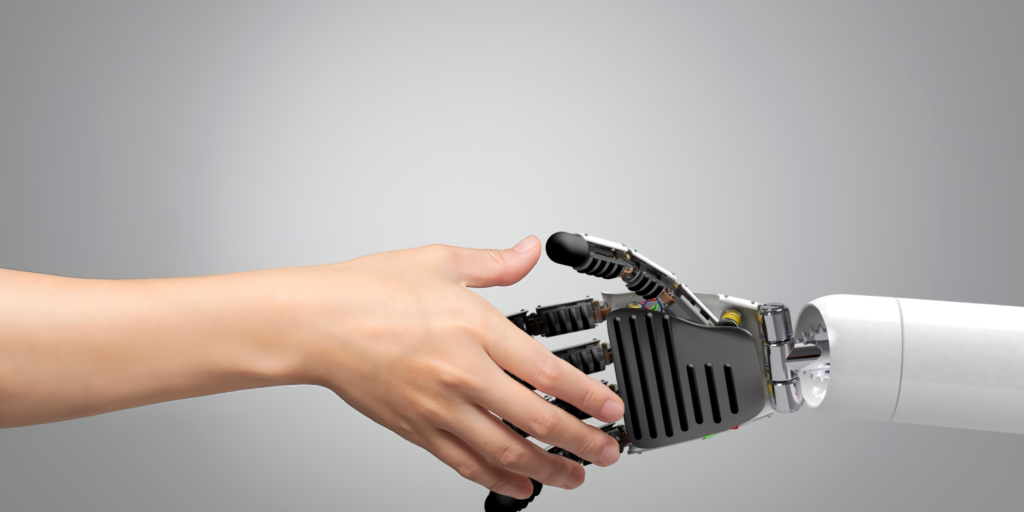
Ultimately, the future of professions with AI is not about rivalry between people and robots. It is about teamwork. Those who embrace flexibility, continual learning, and responsible innovation will succeed in an AI-powered future.
FAQ
Q: Will my job be replaced by AI?
A: AI is predicted to change occupations rather than completely replace them by automating monotonous, rule-based activities, freeing up human labor for higher-value positions that call for creativity, judgment, and emotional intelligence. Millions of new, more tech-enabled occupations are anticipated to be created, notwithstanding the possibility that millions of jobs may be lost worldwide.
Q: How are jobs being impacted by AI?
A: Employers in developed economies are looking for personnel who can create, implement, or collaborate with AI systems. This need is seen across a wide range of industries, including public services, manufacturing, healthcare, finance, and logistics.
Q: Is a profession in AI a suitable fit for the future?
A: The need for qualified AI specialists is increasing along with the need for intelligent, data-driven systems. For this reason, one of the best job options for students preparing for the future is to pursue a B. Tech in Artificial Intelligence & Machine Learning.